
ADAPTIVE LEADERSHIP PRACTICES FOR DIGITAL TRANSFORMATION IN MID-SIZED TECHNOLOGY FIRMS
By
Student name
Professor Name
DB-FPX8640 – Topic Review
Maja Zelihic, PhD, Dean
School of Business, Technology, and Health Care Administration
A Capstone Work Presented in Partial Fulfillment
Of the Requirements for the Degree
Doctor of Business Administration
Organizational Leadership and Development
Capella University
Submission Date
Abstract
The abstract should be used to give a brief and precise overview of the major aspects of your capstone project. Place the abstract in the form of a single block-style paragraph with no first line indent. Respond to the following points (not more than 400 words). Summary of research topic (1-5 sentences) a brief overview of your capstone research topic. Support your reason why you are conducting a study and why the study is necessary. Write your research questions, as they are in your capstone sections. Methodology of the research (1-2 sentences). Overview the study research methodology. Population and sample (1-2 sentences). Report on the population and sample, with some high-level demographics on your participant population. In case secondary data has been utilized, describe the data set. Data analysis (1-2 sentences) gives a very brief summary of your data analysis. The findings (1-3 sentences) are a brief summary of your research findings and conclusion(s). Give practical implications of your project and the deliverable that you made.
Advice on Writing a Good Abstract. (a) The abstract gives a representative of your work. Your abstract will be reviewed by researchers to see whether your manuscript is worth reading and to see whether it was applicable to their literature review. The people in your discipline will read your abstract in order to find out more about your type and quality of doctoral work. Thus, the abstract stands as a record of your doctoral-level work. (b) Additional guidelines for development of an abstract are in section 3.3 of the APA Publication Manual, 7th edition, or on Campus at Academic Writer, https://academicwriter-apa-org.library.capella.edu/learn/browse/QG-59?group=All&view=list&term=abstract&sort=asc (c) References are generally not used in the abstract, as the focus is the study, the research, and the findings.
Paragraph and Page Formatting for the Abstract. Format the abstract as one double-spaced block-style paragraph (i.e., do not indent the first line). Set the text flush left, ragged right. Do not justify the right margin. Do not use headings, bullets, or bold. The Abstract page is not numbered, and “Abstract” does not appear in the Table of Contents.
Dedication
This dedication page is optional. It is your personal acknowledgment indicating your appreciation and respect for significant individuals in your life. The dedication is personal; thus, any individuals named are frequently unrelated to the topic of the capstone.
Typically, learners dedicate the work to the one or two individuals who instilled the value of education and the drive to succeed in educational pursuits. Learners often dedicate capstones to relatives, immediate family, or significant individuals who have supported them or played a role in their lives.
Avoid identifying participants or anyone connected with the research site. You may use individuals’ titles with no name (e.g., “Thanks to the research director and site proctor for their help”). Or you may name individuals without connecting them to the site (e.g., “Thanks to Abdul Ibrahim and Mary Carson for their help”). Typically, avoid naming the site.
Note: if the Abstract runs onto a second page, change the page number of the Dedication to 4.
Acknowledgments
This is a page of acknowledgements which is optional. The acknowledgements are distinctly different to the dedication in that they acknowledge those individuals that have helped you in your academic pursuits regarding the advanced doctoral manuscript or those who have played a part in your academic career in reference to the research of the advanced doctoral manuscript. This could include a mentor and committee, advisor, online or colloquia faculty, and other support individuals, Capella or other organization. In case you were financially aided by means of fellowships, grants or other organizational aids, write about it in this section. They are also suitable in acknowledging statisticians, transcriptions, and individuals who have given consent to the use of an instrument, et cetera.
Do not name participants or anyone that relates with the research site. It is okay to use the title of people without their names (e.g. thanks to the research director and site proctor who helped us). Or you can designate people who are not related to the site (e.g., “Thanks to Abdul Ibrahim and Mary Carson who helped me out) generally, you should not name the site. Students usually give credit to the ones that have given them the privilege to utilize a tool.
Table of Contents
Acknowledgments…………………………………………………………………………………………………………… 4
List of Tables………………………………………………………………………………………………………………. 7
List of Figures……………………………………………………………………………………………………………… 8
SECTION 1. PROJECT DESCRIPTION………………………………………………………………………….. 9
Overview of the Project…………………………………………………………………………………………………… 9
Problem Statement and Purpose………………………………………………………………………………………… 9
Theoretical Framework…………………………………………………………………………………………………….. 9
Project Context…………………………………………………………………………………………………………… 9
Historical Background and Current Trends………………………………………………………………………. 9
Synthesis of the Scholarly Literature……………………………………………………………………………….. 9
Synthesis of the Practitioner Literature…………………………………………………………………………….. 9
Alignment of the Project With the Literature and Discipline………………………………………………. 9
SECTION 2. PROCESS………………………………………………………………………………………………… 10
Project Questions………………………………………………………………………………………………………. 10
Project Design/Method………………………………………………………………………………………………. 10
Stakeholders, Participants, and Target Audience……………………………………………………………….. 10
Role of the Researcher……………………………………………………………………………………………….. 10
Project Study Protocol………………………………………………………………………………………………. 10
Sample……………………………………………………………………………………………………………………….. 10
Data Collection…………………………………………………………………………………………………………… 10
Ethical Considerations………………………………………………………………………………………………. 10
Data Analysis…………………………………………………………………………………………………………. 10
SECTION 3. FINDINGS AND APPLICATION…………………………………………………………….. 12
Relevant Outcomes and Findings……………………………………………………………………………………. 12
Application and Benefits…………………………………………………………………………………………… 12
Implications………………………………………………………………………………………………………………. 12
Recommendations for Policy……………………………………………………………………………………… 12
Recommendations for Practice…………………………………………………………………………………. 12
Recommendations for Future Work………………………………………………………………………….. 12
Conclusion………………………………………………………………………………………………………………… 12
REFERENCES…………………………………………………………………………………………………………….. 13
APPENDIX A. TITLE OF APPENDIX A………………………………………………………………………. 14
APPENDIX B. TITLE OF APPENDIX B………………………………………………………………………. 15
List of Tables
Table 1. Set Table and Figure Titles in Title Case………………………………………………………… xx
Table 2.. Title ………………………………………………………………………………………………………….. xx
List of Figures
Figure 1. Set Table and Figure Titles in Title Case………………………………………………………… xx
Figure 2. Title ………………………………………………………………………………………………………….. xx
SECTION 1. PROJECT DESCRIPTION
Overview of the Project
The modern business environment has made digital transformation an urgent demand of those organizations that not only aim at enhancing the efficiency of their operations, but also at maintaining a competitive advantage, namely, mid-sized technology companies that do not lack their share of challenges in the process of digital transformation (Nnenna et al., 2024). Ameen et al. (2022) state that mid-sized organizations are usually at a disadvantage with the complications associated with digital transformation, which results in low operational efficiency, disengagement of employees, and inability to meet strategic goals.
Digital transformation is the smooth process of applying digital technologies to all the areas of business, which alters the manner in which organizations work and create value to the customers (Varzaru and Bocean, 2024). The adoption of new technologies is a process that entails adopting a culture of innovation and responsiveness. Ramesh and Delen (2021) summarized that 90% of digital transformation projects fail because of many reasons, including resource limitation and resistance among employees. The resources limitations and the resistance of the employees are the challenge, which implies that mid-sized firms should find ways of implementing more effective strategies to help them cope with the organizational change.
Middle-sized companies tend to have small budgets and employees in contrast to large companies that possess plenty of funds to devote the digital programs (Sklenarz et al., 2024). A report shows that 54 percent of leaders in the middle market consider digital transformation to be very critical, and only 9 percent believe it to be a core part of its company strategy (National Center for the Middle Market, 2020). The gap between awareness and implementation implies specific strategic measures that would capitalize on the advantages of mid-sized organisations.
Although the significance of digital transformation is a well-known fact, mid-sized organizations have a range of critical challenges when implementing them. Lack of resources in many mid-sized organizations restricts their opportunity to successfully implement digital projects and tends to act violently forcing them to operate with the old systems (Hojnik and Hudek, 2023).
Moreover, the digital skills gap is acute since approximately two-thirds of mid-sized companies declare that they do not have the type of staff members that can orient in the new technologies and prevent their digital activities (National Center for the Middle Market, 2020). Furthermore, one of the major issues is that of the employee resistance; complete disengagement at the full-scale may block the adoption of new technologies, and that is why the implementation of a change initiative may fail in mid-size technology companies (Cieslak and Valor, 2024).
The project explores the use of adaptive leadership practices at mid-sized technology organizations to overcome digital transformation barriers. In this project, the researcher is interested in the influence of adaptive leadership on employee resistance, which means that organizations with effective digital leaders have higher chances of making it in their transformation attempts. The other analysis of adaptive leadership in the project involves the ability of adaptive leadership to develop an innovation culture, in which studies have established that organizations exercising the adaptive leadership experience a better success rate in their digital projects.
Adaptive leaders may also enhance engagement and lessen resistance through open communication and engaging employees in the decision-making process (Chughtai et al., 2023). The project also analyzes how better the digital tools can be adopted, and one of the strategies is the necessity to train employees and the culture of experimenting with new things. This imperfect culture suits mid-sized technology companies perfectly in their long-term journey to ride a fleeting digital environment.
Problem Statement and Purpose
Problem Statement
The overall business issue is that the majority of organizations cannot cope with complex digital transformational technologies and, therefore, become less efficient in their operations and involvement in this disengagement of employees and the inability to achieve the strategic goals (Ameen et al., 2022). The problem is due to poor resource distribution and implementation plans that contribute to the scattered digital activities that are unable to produce anticipated results (Hojnik and Hudek, 2023). The lack of technical skills and financial means is also a challenge in the mid-size organizations, especially in comparison with larger companies, which can assign dedicated teams to devote their time to the digital transformation efforts (Imran et al., 2021). The operational inefficiencies are reflected in the longer project completion times, elevated levels of errors in the digital processes, lower employee productivity, and lack of engagement among employees, which is reflected in the higher resistance to new digital tools and the lower involvement in the transformation projects (Scholkmann, 2021).
The technological problem related to the business is the existence of leaders in the midsize technologies who lack readiness to deploy technologies of digital transformation, which leads to a decrease in competitiveness and the inability to capitalize on growth opportunities (Skare et al., 2023). The resistance of new technologies by the leaders generates a kind of ripple effect within the organization as innovation plans are constantly delayed or rejected (Cieslak and Valor, 2024). Mehta and Liu (2023) presented the latest analysis within the industry that revealed that companies that adopt resistant leadership strategies lose their potential market share to more digitally flexible companies. Furthermore, studies by Leo et al. (2023) suggested that 65 percent of workers in such organizations complain of being out of digital transformation initiatives because of the lack of leadership support and involvement.
Alignment with the Program
The project is being done under the Capella University Doctorate in Business Administration (DBA), majoring in organizational leadership and development. The specialization also increases leadership competencies and knowledge of how successful leadership leads to the change in the organization, particularly within the digital transformation. The project is closely related to the specialization as it explores the possibilities of using adaptive leadership practices to overcome the issues related to digital transformation journeys of mid-sized technology organizations. By exploring how adaptive leadership affects employee resistance and innovation, this project will be compatible with the general goal of creating leaders who can successfully navigate the intricate organizational forces.
The DBA program focuses on applied research, which addresses actual business issues and this is the right fit to what the project has in mind. The organizational leadership assists students with the needed inspiration to organize teams and instill in them a culture of innovation- as it is rather important to be successful in any project related to digital transformation (Nita, 2023). The most evident applicability is that this project utmost conforms to the core competencies of the DBA program which involve strategic decision-making and effective organizational leadership, yet overall best exemplifies most of the current tendencies in business practice, including the necessity of adaptive leadership in the ever-growing digital environment. The results of the present research can be applied to personal practical use in the area of organizational leadership.
Purpose Statement
This qualitative project is aimed at discovering the views of the leaders of middle-sized technology companies performing the digital transformation technologies to enhance productivity, the result of which raises competitiveness and growth prospects. The data in this study will be gathered by means of interviews to comprehend the impact of adaptive leadership practices on the organizational readiness to digitalize. To be more precise, the research will be oriented at the way in which leaders approach the issues of digital transformation, how they approach the adoption of technology, and what they believe in innovation in their organizations.
By contributing to the existing understanding of the leadership aspects that inhibit or support digital transformation, this study aims to provide practical recommendations that could help business executives to manage change and generate sustainable value in the environment that is becoming more and more digital. Finally, the proposed project will stakeholders in the field of theoretical and practical knowledge regarding overcoming the difficulties that mid-size technology firms face during the digital transformation to achieve their strategic objectives.
Gap in Practice
The practice gap is that the leaders of midsize technology companies lack strategies to address resistance to adopting digital transformation technologies that would help improve their competitiveness and growth prospects in the market (Errida &Lotfi, 2021). The leadership gap is reflected in the fact that the change process is managed effectively, the efforts of team members are aligned with the digital transformation objectives, and the required levels of digital competencies in the organization are developed. Most leaders are unable to create the environment that can support technological adoption and innovation, which leads to inefficiencies in operations and lack of market opportunities. Kraus et al. (2021) assert that the inability to respond to changes in technology development and market conditions results in poor performance of organizations in a rapidly evolving digital market due to lack of effective leadership strategies.
The intended outcome is to practice the narrowing of such gap by being willing to improve adaptive leadership in businesses, hence establishing a situation to control and generate a culture of change and foster innovations inside its ranks so that firms can advance their performance and align its staff toward a strategic focus. The adaptive leadership practice implementation leads to improved communication, employee engagement, and responsive structure in terms of change reaction (Chughtai et al., 2023). With this ideal scenario, leaders will continuously dedicate more time in creating and training employee workforce. Hence, they have prepared their teams with the digital skills that are needed to survive and perform high in such a dynamic environment.
The given project can shed a certain amount of light on practitioners on how adaptive leadership can close the gap between the application of technology and employee abilities. Considering the constantly evolving digital environment, business leaders can significantly enhance the capacity of their organization to succeed when they create an environment of constant learning and innovation (Chughtai et al., 2023). Companies that have adopted adaptive leadership are well placed to survive the digital transformation challenges. Finally, sealing this practice gap does not only enhance working efficiency but also creates a workplace culture where employees will be empowered to advance ideas and spearhead innovation to maintain a competitive edge in the market.
Theoretical Framework
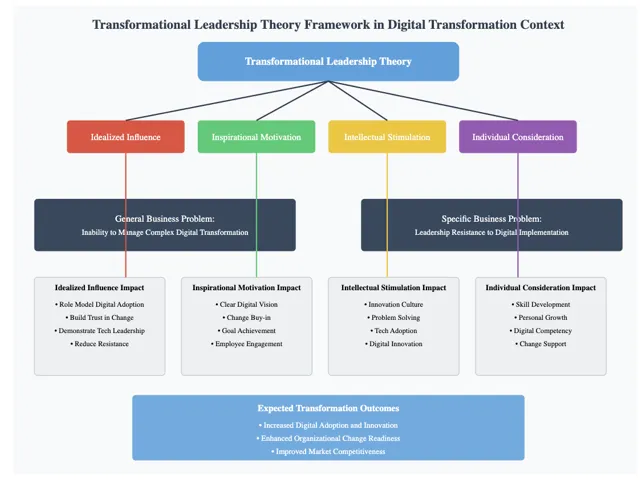
The transformational leadership theory offers a strong theoretical basis to the study of the role of leadership practices in digital transformation success in intermediate technology companies. In 1978, James MacGregor Burns was the first to coin the concept of transformational leadership (Burns, 1978). According to Burns, transformational leadership was a process in which the leaders and the followers related with each other in a manner that elevated their morality and motivation (Burns, 1978). Burns constructed a theory depending on a concept of the monumental works which left the foundation of leadership made by values, purpose and shared goals. The framework also has 4Is in which the person is influenced with idealized influence, inspirational motivation, intellectual stimulation and individualized consideration (Burns, 1978).
Bernard M. Bass developed the ideas of Burns and presented a more elaborate model of transformational leadership in 1985 that offers a more in-depth perspective on the transformational leadership theory (Bass, 1985). Subsequently, in 1994, Bass and associates narrowed down the four core constructs of the transformational leadership concept (Bass and Avolio, 1994). The dimensions captured the behaviors that are related to transformational leadership and differentiated it with transactional leadership. The theory was further developed by Bass and Avolio (1994) when they developed multifactor leadership questionnaire (MLQ); this became the most common tool of measuring transformational leadership behaviors.
Within the framework of digital transformation, the theory of transformational leadership applies since it focuses on how the leader can encourage innovation, adaptive thinking, and supportive environment towards change (Gui et al., 2022). Specifically, the theoretical lens proves to be rather suitable when it comes to the consideration of the particular business issue of leadership resistance to adopting digital transformation technology in mid-sized companies since it offers clear constructs in the context of exploring how leadership behaviors determine technology adoption and readiness to embrace organizational change (Rahi et al., 2021). Having the special emphasis on personal and organizational change, the transformational leadership theory is especially relevant to the research of how the leaders can be effective in guiding their organizations in the challenges of the digital transformation and keeping the staff engaged and the culture of innovation flourishing.
The transformational theory of leadership has been developing with the reaction to the technological changes, and modern researchers, including Bajcar and Babiak (2022) that explored the role of the theory in the digital transformation. The theory has been relevant in recent studies focused on the application of principles of transformational leadership in the digital era, such as the recent investigation by Omol (2023), who notice the approach to the application of the theory as applicable to contemporary organizational issues like the adoption of technology and digital innovation. Reasoning in the framework of digital transformation, researchers have broadened the scope of the theory to apply it to new leadership issues, such as virtual team leadership, developing digital literacy, and technology-based organizational change (Musaigwa & Kalitanyi, 2024; Pawar and Dhumal, 2024).
The four dimensions of transformational leadership offer the holistic approach to the effective leadership behaviors in the context of the digital transformation. The first dimension is idealized influence meaning that leaders are role models and have high ethical standards and have followers that trust them (Burns, 1978). The idealized influence in digital transformation programs can be performed by leaders actively adopting and showing theological dedication to the new technologies to be used as a role model to the employees (Zen et al., 2023).
The second dimension is inspirational motivation that is the articulation of a compelling vision and establishing challenging goals that would give energy to followers (Burns, 1978). When it comes to the digital context, this aspect is essential when it comes to conveying the digital vision within the organization and setting specific goals regarding technological adoption (Pelaez et al., 2023). With the critical employment of inspirational motivation, leaders can establish a common vision of the journey of digital transformation and its prospective advantages and enhance the level of employee buy-in and engagement. The third dimension is the intellectual stimulation, which focuses on promoting innovations, creative solutions, and challenging the existing assumptions (Burns, 1978). The given dimension is especially topical in the context of digital transformation because it encourages the exploration of new technologies and ways of handling business processes (Lai et al., 2020).
Memon and Ooi (2023) showed that inspirational leaders that promote intellectual stimulation promote the adoption and use of technology and digital innovation among their employees. The fourth dimension, individualized consideration, is based on demand of individual needs and the development of potential of followers with the help of mentoring and coaching (Burns, 1978). This translates into the digital transformation scenario as leaders engage in one-on-one support of the development of digital competencies, confront individual anxieties regarding technological change, and offer customized learning prospects (Griep et al., 2021). According to Trenerry et al. (2021), high individualized consideration levels allow leaders to attain superior performance in digital skill development and lower resistance to technological change among their subordinates.
Development of the transformational leadership theory constructs can be discussed as the important development of the initial conceptualization of the theory to the current uses in the digital environment. In the very outset, Burns (1978) theorized transformational leadership as a process whose central elements were moral elevation and motivation whereas Bass (1985) built up the core by operationalizing the constructs into quantifiable elements and determining how they relate to organizational performance. As Susan et al. (2023) have proven, there were strong correlations between the transformational leadership style that assists in using digital transformation and enhancing the performance of the organization.
Constructs of the theory have been significantly transformed in the digital age when modern researchers modify their implementation in technologically oriented settings (Ly, 2023). Schiuma et al. (2021) have shown how the conventional constructs of transformational leadership have been changed to deal with the issue of digital transformation in specific areas such as technology adoption and change management. The results of Zhang et al. (2021) have also contributed to the application of the theory by studying the role of transformational leadership behaviors in affecting digital innovation and technological resilience in businesses. Current understandings of the theory focus on the contribution to the emergence of digital literacy, and Ly (2023) found that there are notable connections between transformational leadership practices and effective digital transformation programs, especially in the context of mid-sized technology companies, where leadership behavior directly correlates with the rate of technology adoption and the achievement of innovation.
Figure 1
Transformational Leadership Theory Framework and Business Problem Alignment
The current empirical research indicated the changing use of the theory of transformational leadership towards digital transformation situations especially in responding to the issues of mid-sized technology companies. Cetindamar et al. (2021) also uncovered that transformational leadership behaviors play an essential role in employee acceptance of digital technologies, which directly resolves the overall business issue of organizations facing a low rate of operational efficiency and employee apathy towards digital transformation projects. The modern uses of the theory demonstrate some specific usefulness in the context of the particular business issue of leadership resistance to the introduction of digital transformation technologies, which is confirmed by Chukwuma and Zondo (2024), who clarified that transformational leadership practices cause the risk of resistance to change by reducing and improving the competitiveness of the market.
Transformational leadership styles have been found to raise the level of digital adoption 45% higher than the conventional leadership styles in mid-sized technology organizations (Erhan et al., 2022). The theoretical framework of transformational leadership offers a methodical process of researching leadership-related behaviors based on a set of well-constructed interview questions that address four dimensions of transformational leadership concerning digital transformation success. Karimi et al. (2023) have shown that transformational leadership constructs are effective to direct the data structure in the study, especially the investigation of the relationship between leadership behaviors and employee engagement and adoption of technological innovations. The focus of the theory on individual consideration and intellectual stimulation can be directly related to bridging the identified gap in practice because leaders do not have strategies to address resistance to the adoption of digital transformation technologies.
The framework is related to the research problem and data collection method within the framework of this project that is aimed at gathering the views of the leader to utilize digital technologies to enhance organizational productivity, competitiveness, and possibilities of growth. The study will determine the major strategies that can be employed by leaders to achieve success in the digital innovation and organizational development by examining the leadership styles of the leaders. The transformational leadership theory application offers a strong system of analyzing the leadership behaviors in the digital transformation scenario. The four basic dimensions of the theory make it possible to formulate interview questions, and each of the dimensions is operationalized with the help of definite questions that can be related to the objectives of the research.
As an example, interview questions may involve the role of idealized influence in assisting leaders to embrace digital transformation. The transformational leadership theory informs the process of designing a holistic coding scheme that includes the elements of manifested and unmanifested content pertaining to transformational leadership behaviors in the digital world (Matsunaga, 2024). In line with the strategy suggested by Ramesh (2024), the initial coding scheme will be developed on the four dimensions of the theory, with subcodes that will be formed during the process as the data evolves the subtle details of leadership in digital transformation.
A hybrid data analysis model will be used, which integrates deductive coding using the constructs of transformational leadership with the inductive thematic analysis, which will enable the appearance of unanticipated patterns and theoretical consistency at the same time (Trenerry et al., 2021). The methodology will aid the systematic explanation of the results in terms of the transformational leadership theory and allow new insights into the role of leadership behaviors on the success of digital transformation in mid-sized technology companies.
The emerging importance of the digital transformation of mid-sized technology companies through the application of the transformational leadership theory has its substantive contributions to theory and practice. Theoretically, the study builds on the classic constructs of transformational leadership by focusing on its success in the particular situation of digital transformation programs, which covers a gap in the literature on the leadership behaviors in technological change settings. The research will modify the theoretical framework in place to explain the special issues in mid-sized technological companies, which will enrich the development of the theory of transformational leadership in the digital era. Practically, the study can provide practical directions to organizational executives who have undertaken the digital transformation efforts.
The correspondence between the business problems identified and the transformational leadership theory indicates that there is high theoretical support of the research framework. The behavioral focus of the theory is very focused on the overall business issue of organizations failing at the digital transformation implementation, mentioned by Gui et al. (2022), and the focus on change management and innovation adoption directly addresses the leadership resistance problem in mid-sized technology companies. Memon and Ooi (2023) also made explicit connections between transformational leadership constructs and the success of digital transformation and the results of their research revealed that the organizations with transformational leaders experience 35 percent difference of higher employee engagement in digital undertakings. Transformational leadership strategy is also recommended by Gui et al. (2022) to use digital change initiatives as an asset in an organization.
Modern implementations of transformational leadership theory within digital settings demonstrate some new tendencies which indicate the shift towards new theoretical setups. Ly (2023) showed the way in which traditional constructs of transformational leadership are being adjusted to suit specific issues of the digital era, including virtual team leadership and digital innovation management. The implementation of the theory in digital transformation has already acquired new facets related to the technology adoption and digital change management, which can be supported by the fact that Seitz and Owens (2020) have provided a detailed review of the latest leadership development applications. New tendencies associated with the digital transformation impose an increasing necessity to investigate how transformational leadership activities change along with the blistering technological progress, specifically, in mid-sized technological companies, where dynamism and innovation are useful to survive.
The concept of transformational leadership theory offers a holistic approach to the analysis of the issues of digital transformation of mid-sized technological companies. The four dimensions of the theory, which include idealized influence, inspirational motivation, intellectual stimulation, and individualized consideration, coincide with the area of research which is the determination of how leaders apply digital transformation technologies to enhance their productivity and competitiveness (Matsunaga, 2024). The theoretical framework will be used to explore leadership strategies that may be used to address opposition to change as recent research indicates that transformational leadership practices are effective in lowering the rate of employee resistance and increasing the rate of digital adoption (Chukwuma and Zondo, 2024).
Moreover, the focus on innovation and flexible thinking presented in the framework that Karimi et al. (2023) examine is a framework that allows researchers to study comprehensively how leaders can build an environment that will allow technological progress and organizational development. Such a theoretical background does not only inform the research approach but also makes it possible to state that the results will be valuable to both the academic and practical implications of curbing the processes of digital transformation within the mid-sized technology companies (Ly, 2023).
Project Context
Historical Background and Current Trends
Synthesis of the Scholarly Literature
Synthesis of the Practitioner Literature
Alignment of the Project With the Literature and Discipline
SECTION 2. PROCESS
Project Questions
Project Design/Method
Stakeholders, Participants, and Target Audience
Role of the Researcher
Project Study Protocol
Sample
Data Collection
Ethical Considerations
Data Analysis
Figure 1
Types of Garbage
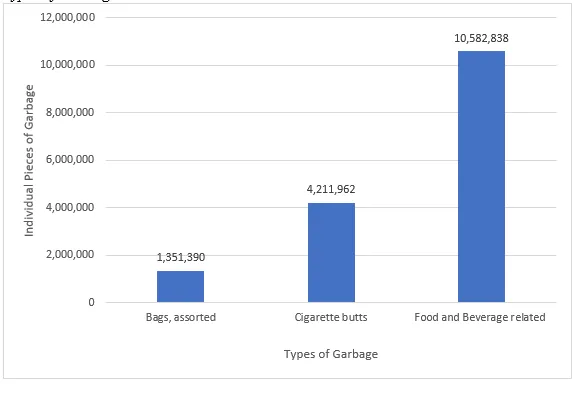
Note: Insert information about the source or presentation of the data if you did not create the figure. Add copyright/permission notes for copied information, even government materials, require 10-point acknowledgment below the image. Be sure to include a permission acknowledgment, e.g., “Reprinted [or adapted] with permission.” See the templates at https://academicwriter-apa-org.library.capella.edu/learn/browse/QG-28.
Table 1
Demographic Information
Participant | Age | Sex | Position | Years in position |
P1 | 25-30 | Male | Chairman | 10-15 |
P2 | 41-45 | Female | CEO | 6-10 |
Note. Potential participants under age 16 were omitted from the sample. Only essential notes need to be included. See Table setup (apa.org) and https://academicwriter-apa-org.library.capella.edu/learn/browse/QG-44?group=All&view=list&term=tables&sort=asc. The Doctoral Publications Guidebook also addresses tables and figures.
SECTION 3. FINDINGS AND APPLICATION
Relevant Outcomes and Findings
Application and Benefits
Implications
Recommendations for Policy
Recommendations for Practice
Recommendations for Future Work
Conclusion
…..
APPENDIX A. TITLE OF APPENDIX A
Format titles as shown here. Do not include recruitment flyers, permissions correspondence, invitations to subject matter experts, or informed consent forms. They should be removed before submission to committee and doctoral publications review. Place tables and figures in the sections at the point where they are discussed.
APPENDIX B. TITLE OF APPENDIX B
Format titles as shown here. Do not include recruitment flyers, permissions correspondence, invitations to subject matter experts, or informed consent forms. They should be removed before submission to committee and doctoral publications review. Place tables and figures in the sections at the point where they are discussed.