
EXPLORING LEADERSHIP STRATEGIES THAT MID-LEVEL MANAGERS USE TO MAINTAIN EMPLOYEE ENGAGEMENT IN REMOTE/HYBRID WORK ENVIRONMENTS IN THE TECHNOLOGY SECTOR
By
Student name
MENTOR NAME IN ALL CAPS, Degree, Faculty Mentor and Chair
FACULTY NAME, ALL CAPS, Degree, Committee Member
FACULTY NAME, ALL CAPS, Degree, Committee Member
Insert correct Dean’s name and credentials
School of _____
A Capstone Work Presented in Partial Fulfillment
Of the Requirements for the Degree
Insert correct degree designation
Capella University
Month & year of dean’s approval
Abstract
The abstract aims at giving a brief, but precise, summary of important aspects of your capstone project. Put an abstract on one block in non-indented paragraph form. Discuss the following issues (Use 400 words at most). Potential research topic summary (1-5 sentences), a brief summary of your capstone research topic. Delineate your reasons of the study and the necessity of the study that the capstone covers. State your research questions, in the same wording as your capstone sections. Methodology of the research (1-2 sentences). Concisely describe the method of research followed in the study. population and sample (1-2 sentences).
Explain how the population and sample, such as high-level demographic data on your participant pool. In case secondary data was utilized, explain the data set. Data analysis (1-2 sentences) summarizes briefly your data analysis. Findings (1-3 sentences) give a brief overview of the findings of your research and conclusion(s). Write about the practical implications of your project and deliverable.
Advice on Writing a Good Abstract. (a) Your work is represented in the abstract. Your abstract will be reviewed to check whether your manuscript should be read and considered by the researchers in addition to relevance to their literature review. The members of your discipline will read through your abstract in order to get more insight about what the quality of your doctoral work is and what it is all about. Thus, the abstract stands as a record of your doctoral-level work. (b) Additional guidelines for development of an abstract are in section 3.3 of the APA Publication Manual, 7th edition, or on Campus at Academic Writer, https://academicwriter-apa-org.library.capella.edu/learn/browse/QG-59?group=All&view=list&term=abstract&sort=asc (c) References are generally not used in the abstract, as the focus is the study, the research, and the findings.
Paragraph and Page Formatting for the Abstract. Format the abstract as one double-spaced block-style paragraph (i.e., do not indent the first line). Set the text flush left, ragged right. Do not justify the right margin. Do not use headings, bullets, or bold. The Abstract page is not numbered, and “Abstract” does not appear in the Table of Contents.
Dedication
This dedication page is optional. It is your personal acknowledgment indicating your appreciation and respect for significant individuals in your life. The dedication is personal; thus, any individuals named are frequently unrelated to the topic of the capstone.
Typically, learners dedicate the work to the one or two individuals who instilled the value of education and the drive to succeed in educational pursuits. Learners often dedicate capstones to relatives, immediate family, or significant individuals who have supported them or played a role in their lives.
Avoid identifying participants or anyone connected with the research site. You may use individuals’ titles with no name (e.g., “Thanks to the research director and site proctor for their help”). Or you may name individuals without connecting them to the site (e.g., “Thanks to Abdul Ibrahim and Mary Carson for their help”). Typically, avoid naming the site.
Note: if the Abstract runs onto a second page, change the page number of the Dedication to 4.
Acknowledgments
This acknowledgments page is optional. The acknowledgments differ from the dedication in that they recognize individuals who have supported your scholarly efforts related to the advanced doctoral manuscript or who have held a role in your academic career as it relates to the research of the advanced doctoral manuscript. This might mean a mentor and committee members, advisor, online or colloquia faculty, and other support people from Capella or other organizations. If you received financial support from fellowships, grants, or other organizational support, note it in this section. The acknowledgments are also appropriate for thanking statisticians, transcriptions, those who have provided permission to use an instrument, and the like.
Avoid identifying participants or anyone connected with the research site. You may use individuals’ titles with no name (e.g., “Thanks to the research director and site proctor for their help”). Or you may name individuals without connecting them to the site (e.g., “Thanks to Abdul Ibrahim and Mary Carson for their help”) Typically, avoid naming the site. Learners often thank those who have provided permission to use an instrument.
Table of Contents
Acknowledgments…………………………………………………………………………………………………………… 4
List of Tables………………………………………………………………………………………………………………….. 7
List of Figures………………………………………………………………………………………………………………… 8
SECTION 1. PROJECT DESCRIPTION………………………………………………………………………….. 9
Overview of the Project…………………………………………………………………………………………………… 9
Problem Statement and Purpose………………………………………………………………………………………… 9
Theoretical Framework…………………………………………………………………………………………………….. 9
Project Context……………………………………………………………………………………………………………….. 9
Historical Background and Current Trends………………………………………………………………………. 9
Synthesis of the Scholarly Literature……………………………………………………………………………….. 9
Synthesis of the Practitioner Literature…………………………………………………………………………….. 9
Alignment of the Project With the Literature and Discipline………………………………………………. 9
SECTION 2. PROCESS………………………………………………………………………………………………… 10
Project Questions…………………………………………………………………………………………………………… 10
Project Design/Method…………………………………………………………………………………………………… 10
Stakeholders, Participants, and Target Audience……………………………………………………………….. 10
Role of the Researcher…………………………………………………………………………………………………… 10
Project Study Protocol…………………………………………………………………………………………………… 10
Sample……………………………………………………………………………………………………………………….. 10
Data Collection…………………………………………………………………………………………………………… 10
Ethical Considerations……………………………………………………………………………………………………. 10
Data Analysis……………………………………………………………………………………………………………….. 10
SECTION 3. FINDINGS AND APPLICATION…………………………………………………………….. 12
Relevant Outcomes and Findings……………………………………………………………………………………. 12
Application and Benefits………………………………………………………………………………………………… 12
Implications………………………………………………………………………………………………………………….. 12
Recommendations for Policy………………………………………………………………………………………… 12
Recommendations for Practice……………………………………………………………………………………… 12
Recommendations for Future Work……………………………………………………………………………….. 12
Conclusion……………………………………………………………………………………………………………………. 12
REFERENCES…………………………………………………………………………………………………………….. 13
APPENDIX A. TITLE OF APPENDIX A………………………………………………………………………. 14
APPENDIX B. TITLE OF APPENDIX B………………………………………………………………………. 15
List of Tables
Table 1. Set Table and Figure Titles in Title Case………………………………………………………… xx
Table 2.. Title ………………………………………………………………………………………………………….. xx
List of Figures
Figure 1. Set Table and Figure Titles in Title Case………………………………………………………… xx
Figure 2. Title ………………………………………………………………………………………………………….. xx
SECTION 1. PROJECT DESCRIPTION
Overview of the Project
Remote and hybrid work patterns have dramatically altered the dynamics in organizations in every industry. The technology industry has been leading the change with most companies implementing permanent hybrid office setups. The shift has posed unprecedented problems to midlevel managers who now have to lead a scattered team working in virtual space. Engagement of employees has become a burning issue and research has shown that remote workers are less engaged than on-site workers (Wontorczyk & Roznowski, 2022). The lack of alignment between physical work areas and motivational changes among employees has prompted a leadership crisis that requires instant response.
The executives are pressured by the middle rank managers who occupy the position of linking the organization vision to the frontline operations. The managers have to strike a balance between the organizational productivity requirements and the human desire to have a connection and a sense of purpose in the remote environment. The competition within the technological industry heightens the challenges with companies competing over the talent in a rather virtual market.
The cost is high, and the organizations lose a lot of productivity and ability to innovate because of disengaged workers (Damnjanovic et al., 2023). The keys to successful operations of mid-level managers dealing with the complexity of the challenges are invaluable to the existence and development of organizations.
Mid-level managers are an overlooked but a very crucial role in organizational hierarchies in the technosphere firms. The leaders are mainly in charge of teams and are directly reporting to senior leadership in the organization. The duties include day to day management of operations, performance of teams and implementation of strategic initiatives in the departments. It has been found that mid-level managers have a direct impact on employee engagement variance in the teams (Carrell et al., 2021). In remote and hybrid environments, the position is now manifold more challenging and demanding than it was previously. The old management styles with the physical presence, and direct observation cannot be used in the virtual environment (Eiris et al., 2021).
The digital communication, the asynchronous communication, and the virtual relationship-building methods forced the mid-level managers to develop engagement via digital platforms. Lack of informal interaction points in the hallways and unplanned teamwork has removed numerous informal interaction elements. Managers in the technology industry are subject to other pressures associated with the speed of innovation, geographically distributed teams, and being always-on (Jiao et al., 2021). The factors are integrated to come up with a leadership environment that demands new strategies, skills and approaches. However, there are numerous organizations which did not equip the mid-level managers with the tools which they need to be successful.
The issue of employee engagement in remote and hybrid environments is complex and can not be reduced to the metrics of productivity. Engagement includes the emotional commitment, psychological investment and the discretionary effort that employees make out of their own will to give to the work. The classic signs of interaction in virtual conditions are lost in physical distance and mediated digitally. Studies have established that the engaged employees are more productive and profitable to the organizations (Abdelwahed and Doghan, 2023). Nonetheless, to remain engaged without meeting the team members, the middle-level managers will have to employ strategic, consistent, and creative leadership approaches.
The knowledge intensive nature of the work in the technology industry makes the dynamic even more difficult since creativity and teamwork are even more challenging to develop at a distance. Although virtual meetings are essential, they do not usually show an equivalent of spontaneous ideation which takes place in a real work environment (Brucks and Levav, 2022). Mid-level managers should consequently come up with new strategies of building trust, enhancing teamwork, and ensuring team cohesiveness. The problem is especially sharp with those managers who shifted their working conditions in remote leadership. It is very important to learn the particular tactics the effective managers use to conquer the hurdles to achieve organizational efficiency. The project aims to shed some light on those strategies into actual examination of managerial views and experience.
The project of the qualitative inquiry will assist in investigating the leadership approaches applied by mid-level managers to keep the staff members engaged in remote and hybrid workplaces in the United States technology sector. The project leader will analyze the views of managers regarding good engagement practices, challenges that are experienced and the lessons learnt during implementation. The study will offer practical implications to the technology organizations by exploring the real-life strategies of the practicing managers. The results can be used in leadership training programs, management training programs and organizational policies on remote working. The use of technology companies that invest in learning and developing the abilities of midspecific managers will have the competitive advantages in terms of better retention and productivity (Fannon et al., 2021).
The project is relevant to more than the organizations on the ground as it includes the technology industry at large whose operations are challenged by the same issue of engagement. With the emergence of the remote and hybrid work model becoming a permanent feature of organizational structures, the leadership approaches have to be adjusted to them. The study is part of the growing literature on post-pandemic leadership realities in the technology setting. The developed insights can be used to bridge gaps between the traditional and purely theoretical management theory and the modern virtual leadership practice.
Problem Statement and Purpose
Problem Statement
The overall business issue is that the companies find it hard to keep the employees engaged in remote and hybrid work settings, which leads to lower productivity, low innovation, and employee turnover (Singh and Sant, 2023). The shift to distributed work models has upset the traditional engagement processes based on physical presence and in-person interactions. Most organizations have discovered that the current leadership practices do not apply to the virtual team management situations. Employee disengagement is expressed in various forms, such as less teamwork, a lack of organizational commitment, and a sense of belonging in remote workers (Agina et al., 2023). It has been shown that working remotely places a barrier to informal communication and relationship-building so fundamental to engagement (Cimperman, 2023).
The absence of the spontaneous interactions and observable workplace culture has undermined the emotional attachments that employees have to the organizations. The unique issues with technology companies are that the knowledge-intensive work requires high creativity, cooperation, and innovative thinking. Both cognitive and social processes become much harder to enable in virtual environments without any conscious efforts. The transition to remote working was fairly fast, and most organizations were unable to respond efficiently to the engagement issues (Singh and Sant, 2023). In most cases, leaders in the industries are still struggling with how to ensure that you create a meaningful link in the largely digital workspace.
The targeted business issue is that middle managers of the technology firms in the United States do not have proper strategies to keep employees engaged in remote and hybrid work environments, which leads to deteriorating team performance and high turnover rates (Moore and Hanson, 2022). Most of the employees in the technology organizations come in contact with the mid-level managers who act as the main point of contact. The managers will be tasked with converting the organizational vision into everyday activities as well as facilitating the growth and welfare of each individual employee. Nevertheless, most middle-level managers were trained as leaders of conventional managerial methods and strategies that were oriented at the office (Uru et al., 2022).
Virtual leadership competencies are different, and those that are needed in the physical work setting (Agina et al., 2023). Mid managers claim that they are not ready to deal with the engaging issues specific to remote team leadership. The lack of physical distance removes a lot of free and casual touchpoints that managers previously relied on to determine employee morale and commitment. The virtual communication success never penetrates the nonverbal tools and information necessary to comprehend the emotional states of employees (Eiris et al., 2021). Managers in the technology sector have an added challenge of managing teams that are located in various time zones and cultural environments around the world and in different time zones (Singh and Bhaskar, 2025). Lack of training, lack of virtual leadership experience coupled with the changing team dynamics have left managers in a state of uncertainty. Managerial capability difference has a direct influence on employee retention, team unity, and organisational performance in the technology industry.
Alignment with the Program
This is being done as a part of the Capella University Doctorate in Business Administration (DBA) specialization of Leadership. The DBA Leadership specialization is aimed at shaping scholar-practitioners who would be able to respond to complex organizational issues using evidence-based leadership practices. The specialization also fits the project as it focuses on the issue of analyzing the role of leaders in influencing organizational performance and the performance of employees. Mid-level manager strategies of retaining employee engagement is one of the leading leadership skills in modern organizations. Virtual leadership is now a key to the organizational success in the business after the pandemic (Chouhan and Shukla, 2025).
The project assists in solving the burning crossroads between the practice of leadership, employee engagement and technological transformation in the contemporary workplaces. The study targets the mid level managers who have understood the critical role in converting the strategic vision to operational reality. The insights into how the leaders can overcome engagement issues will add to the existing research in the field of leadership and leadership practice. The qualitative enquiry approach of the project fits the focus of DBA program on systematic exploration of real-life business issues. The congruence between the project, the leadership specialization and the applied research mission of the DBA program is all inclusive.
Purpose Statement
The qualitative inquiry project will involve seeking the opinions of mid-level managers in the United States technology industry on effective leadership approaches that can be used to ensure that employees remain engaged in remote and hybrid work situations. The research will survey the lived experiences and viable strategies that the mid-level managers use to encourage engagement among distributed teams. The target population will be mid-level managers who are already in charge of remote or hybrid staff at technology companies. The managers have to have two years of experience in managing teams in virtual or hybrid work environments. The geographic scope covers technology organizations located in the United States in all Census regions to provide a wide range of opinions.
The phenomenon under investigation encompasses the particular leadership strategies, communication practices and engagement tactics that managers employ in their day to day operation. The question will aid in exploring how managers can build trust, keep their teams together, and collaborate without the need to be physically present regularly. The study will also address the issue of challenges management is experiencing and the contextual issue affecting the choice of strategy. The collection of data shall be done by semi-structured interviews wherein managers are to be given a chance to express their experiences and insights in an elaborate manner. The qualitative research method is suitable since the strategy will facilitate in-depth investigation of managerial views, which cannot be identified through quantitative methods (Hammoumi et al., 2024).
The strategy of the manager will be insightful in the information of the practical approaches in leadership that can be applied in virtual situations. The purpose statement is precise to the definite problem and focuses on the need of mid-level managers that have to have an effective engagement strategy. The attention to managers in the technology sector also guarantees the relevance to the field that is highly affected by remote working changes. The results of the study will provide practical knowledge that will assist managers to improve leadership in distributed work environments.
Gap in Practice
The practice gap is the fact that mid-level managers of technology firms do not have the ability to use structured and evidence-based engagement strategies targeted at remote and hybrid working (Eng et al., 2024). Numerous organizations shifted to remote working quickly without giving managers the necessary training and models on how to lead a virtual team. Mid-level managers are still using the old methods of engagement that were created in the physical work environment and not in online environments. The traditional tactics are quite ineffectual when the distributed teams work within the digital communication channels solely. Studies suggest that the majority of managers are not trained in virtual leadership skills that are required to work on remote teams (Duarte et al., 2025).
Best practices in continuing engagement in remote work environments in the technology sector have not been identified and shared systematically within organizations. Lack of organized strategies means that individual managers have to devise strategies based on trial and error. The ad hoc style leaves unequal engagement performance in different teams of the same organization. Certain managers manage to retain both of them highly engaged and others face difficulties, which results in inequalities in the experience and performance of employees (Eiris et al., 2021). The divide is a significant discrepancy in the attained skills that managers have and the competencies that virtual leadership requires. Technology firms have put a lot of money into collaboration tools and digital infrastructure, and have ignored the human leadership factor. The disconnection and isolation of employees cannot be properly dealt with without conscious strategies to be used in the remote setting by managers.
This is the current situation of the general lack of knowledge among the mid-level managers who are not sure how to approach remote and hybrid teams effectively. Managers also report that they are not ready to deal with the distinctive challenges that virtual leadership presents in the everyday practice. There are numerous organizations offering generic leadership training without dealing with the peculiarities of remote team management. The absence of specific development means that managers have no utilizable models of relationship creation and engagement cultivation in the virtual environment (Mutha & Srivastava, 2021). The mismatch is one of the reasons behind the diminishing rate of engagement and rising turnover in organizations of the technology sector.
The ideal condition is whereby the mid-level managers have the evidence-based actionable strategies on virtual engagement. Organizations must offer formal training programs that impart certain skills to managers in the leadership of remote and hybrid teams. Managers would know how to use digital tools to their advantage without creating a barrier to contact that people need to engage. In the virtual environment, the managers ought to engage in uniform communication, recognition, team building, and performance management practices (Agina et al., 2023). The state to be desired is the one that involves the establishment of best practice framework by organizations which can be adapted by managers to fit the particular team situations (Purcell et al., 2022). Virtual leadership would be considered by technology companies as a specific skill that needs to be developed intentionally but not presumed to transfer to the traditional skills.
Findings of the project would be useful to practitioners as they clarify on certain strategies that are used by successful mid-level managers. Knowledge of the strategies may be used to design specific training interventions to managers who will shift to virtual leadership positions. The insights that can be created with the assistance of the current methods can assist the organization to establish fundamental competencies upon which they will be able to engage in remote work under technological conditions. The evidence-based frameworks of virtual leadership in the organizations could be set up by leaders of the technology sector based on the findings (Valimaki et al., 2024).
Human resource practitioners can use the research findings to manage the selection and developmental system of managers as well as supporting remote teams. The project does not suggest that the findings will address the engagement issues technology companies encounter wholesomely. Instead, the study seeks to bring a real-world knowledge that can assist organizations to reduce the difference between the existing practice and successful virtual leadership. The results are one step to developing a bigger picture on remote team engagement strategies. Organizations, however, need to align the insights to local cultures, contexts, and workforce peculiarities in order to be the most effective (Efimov et al., 2022). The value of the project is that it brought to light the tacit knowledge that successful managers have on the subject of virtual team engagement.
Theoretical Framework
The self-determination theory (SDT) has been widely utilized within the organizational context to model employee motivation and dynamics of engagement at work. The SDT will be used in the project; it was initially created by psychologists Edward Deci and Richard Ryan in 1980s (Center for Self-Determination Theory, 2025). The SDT is a very elaborate model of how human beings get driven, psychological needs, and how they best operate within different settings.
The theory assumes that human beings have three psychological needs that are to be fulfilled in order to achieve psychological development and health (Tang et al., 2021). The basic needs are autonomy, competence, and relatedness, which determine the degree of motivation, engagement, and performance results (Slemp et al., 2021). Supporting practices should be comprehended as they directly determine the involvement in remote technology sectors contexts as social connection has a direct impact.
The theory is especially applicable to the study of leadership as the framework sheds light on how the managerial behaviors contribute to or inhibit the psychological need satisfaction of the employees. When working remotely and in a hybrid setting, satisfaction of the three psychological needs is even more problematic (Gagne et al., 2022). The distance between people, the mediation of human interaction with the help of digital tools, as well as the lack of social presence jeopardize the mechanisms of needs satisfaction that were available in previous days (Kreijns et al., 2021).
The SDT offers a perfect prism through which one can discuss the ways in which the mid-level managers can reorient the leadership strategies (Shree, 2025). The framework allows conducting the systematic investigation of the practices of the manager that help to satisfy psychological needs in virtual team settings (Zhang et al., 2022). The lens of engagement with SDT presents useful information in the creation of evidence-based leadership interventions in technology organizations.
The autonomy is the first central component of SDT and it can be defined as the psychological need to feel that one has self-direction and will in his actions. Autonomy is the ability to see that the actions taken are not imposed on a person or dictated by external factors and authority (Kumar et al., 2022). Autonomy support in an organizational setting occurs when employees are given significant options on the way work is done by the managers (Laaser & Bolton, 2021). Leaders that uphold autonomy promote initiative, do not use a lot of controlling language and listen to the employee input in the decision-making process. It was found that in any industry, autonomy-supportive leadership is a psychological factor that positively predicts employee engagement, job satisfaction, and innovative behavior (Shih et al., 2022).
The remote work conditions are distinctive and offer original challenges and opportunities of autonomy support between the members of the distributed teams (Arunprasad et al., 2022). Physical distance of remote working may either increase autonomy due to less direct oversight or decrease due to further monitoring and micromanagement. The mid-level managers need to strike a balance between ensuring that there is enough structure and giving the employees freedom to manage the work on their own (Chaudhuri et al., 2023). The construct of autonomy will inform the interview questions that will be used to examine how managers achieve the autonomy of remote employees by giving them decision-making power. The virtual aspect of managing autonomy requires an insight into managerial strategies of enhancing engagement within technology industry based organizations.
The second SDT construct is the competence which refers to the desire to feel effective and able to generate desired results. When one feels that they excel, acquire skills, and complete the task successfully in the work, it leads to competence satisfaction (Yan et al., 2022). Managers in the organizational context facilitate competence through constructive feedback, proper challenge, and development opportunities to the members of the team. Facilitating leaders provide a setting in which staff members are able to leverage the strengths and increase the capabilities (Wang et al., 2023). The study has shown that the satisfaction of competence needs is strongly associated with intrinsic motivation, engagement in work, and performance in different workplace settings (Tuin et al., 2021). Remote working and hybrid working may erode competence perceptions by decreasing access to instantaneous feedback and learning experiences.
The lack of informal coaching opportunities and observational learning that are prevalent in the physical workplaces provides competence support challenges. Mid-level managers need to strategically develop virtual skills development, performance feedback, and accomplishment recognition mechanisms (Zhang et al., 2022). The competence construct will direct the interview questions on how managers offer developmental support and recognition of achievements when they are away. The discussion of competence-supporting strategies is especially important towards learning about engagement maintenance in virtual team environments in the technology sector (Duarte et al., 2025). The third construct is connectedness, which is the necessity to feel connected, cared for, and respected by other people (Vo et al., 2022). Relatedness entails the realization of significant relationships, psychological intimacy and feeling of belongingness in social settings.
Relatedness satisfaction in the workplace is achieved via positive interpersonal environment, positive relations and inclusive team cultures. Relatedness is facilitated through managers portraying sincere interest to the employees, helping to collaborate, and ensuring psychologically safe group settings (Hallam et al., 2023). The study revealed that relatedness need satisfaction positively increases organizational commitment, minimizes turnover intentions, and wellbeing among workers (Hwang et al., 2022). Among the three needs of psychology, remote and hybrid work is the greatest threat to relatedness (Petitta and Ghezzi, 2025).
Physical distance destroys informal interpersonal communication and undermines the informal relationships which usually flourish in common working areas. Though useful, virtual communication tools do not always produce the warmth and connection offered by face-to-face communication (Petitta & Ghezzi, 2025). The construct that will direct the interview questions will be the relatedness construct whereby the interviewer will seek to understand the relationship that managers form within virtual teams and how they facilitate a sense of belonging among members (Noto et al., 2023). The importance of comprehending relatedness-supporting practices is high, as social connection directly determines the involvement in remote technology sector situations.
The self-determination theory is the most suitable theoretical framework used in the project because there are a number of reasons which support this point. The psychological needs as highlighted in the theory correspond to the engagement challenges that have been highlighted in the problem statement. Remote work also essentially interferes with the fulfillment of the needs of autonomy, competence, and relatedness, which is the motivation of engagement among employees (Gagne et al., 2022). Over a period of 40 years, the SDT has been widely confirmed in cross-cultural, cross-contextual, and organizational studies. It has been used successfully to analyze the leadership behaviors, managerial practices, and engagement at the workplace in many studies (Gagne et al., 2022; Duarte et al., 2025). The last study has specifically applied SDT to explore the issue of remote work and the effectiveness of virtual leadership in modern organizations (Duarte et al., 2025). The three constructs in the theory give discrete categories of organization and analysis of the qualitative interview data in a systematic way.
All the constructs will be used directly to develop semi-structured interview questions to investigate manager attitudes and approaches. As an illustration, the questions will closely delve into how managers embrace autonomy by delegation practices in virtual environments (Tuin et al., 2021). Competence-supporting behaviors including the virtual delivery of feedback and developmental coaching strategies at a distance will be examined through other questions. Other questions will explore relatedness-building approaches: virtual team-building games and development of relationships on an online platform. Data analysis will also be directed by the constructs as they will offer a coding frame used to categorize manager strategies (Zhang et al., 2022). The deductive method will allow identifying the autonomy, competence, and relatedness leadership practices systematically, based on the interview transcripts. Self-Determination Theory therefore offers theoretical basis and analytical practical value on the qualitative inquiry project.
Project Context
Historical Background and Current Trends
Synthesis of the Scholarly Literature
Synthesis of the Practitioner Literature
Alignment of the Project With the Literature and Discipline
SECTION 2. PROCESS
Project Questions
Project Design/Method
Stakeholders, Participants, and Target Audience
Role of the Researcher
Project Study Protocol
Sample
Data Collection
Ethical Considerations
Data Analysis
Figure 1
Types of Garbage
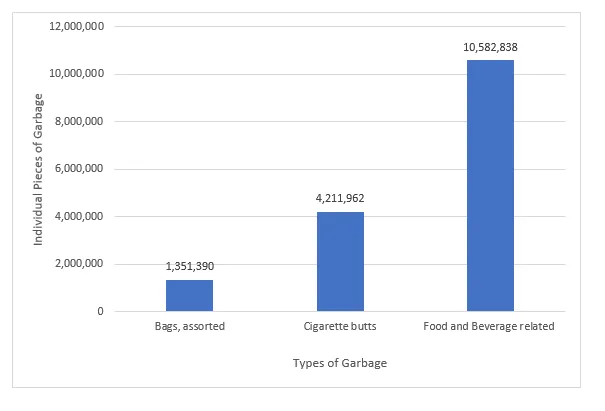
Note: Add information regarding the source or presentation of the data in case you did not create the figure. Insert copyright/ permission text where information is copied, including government documents, must have in 10-point recognition under the picture. Make sure that you have a permission acknowledgment, e.g., “Reprinted [or adapted] with permission.” See the templates at https://academicwriter-apa-org.library.capella.edu/learn/browse/QG-28.
Table 1
Demographic Information
Participant | Age | Sex | Position | Years in position |
P1 | 25-30 | Male | Chairman | 10-15 |
P2 | 41-45 | Female | CEO | 6-10 |
Note. Potential participants under age 16 were omitted from the sample. Only essential notes need to be included. See Table setup (apa.org) and https://academicwriter-apa-org.library.capella.edu/learn/browse/QG-44?group=All&view=list&term=tables&sort=asc. The Doctoral Publications Guidebook also addresses tables and figures.
SECTION 3. FINDINGS AND APPLICATION
Relevant Outcomes and Findings
Application and Benefits
Implications
Recommendations for Policy
Recommendations for Practice
Recommendations for Future Work
Conclusion
………………………………………………..
Related Free Assessment for DB-FPX8640